Visit Anyang

Yin Ruins (World Heritage Site)

Some people love the canyon in spring, when peach blossoms bring soft color and new life.

Some prefer summer, when the Taihang Sky Road rises through deep green shade.

Others enjoy autumn, when Wangxiang Rock is wrapped in warm golden tones.

But some visitors love the canyon most in winter.

The First Days of Winter

Quiet, Pure, and Beautiful

Early winter shows the canyon in its most natural form.

The trees have dropped their leaves, frost covers the dry grass, and ancient cypress and pine trees stand strong along the red cliffs.

Here and there, a bit of green appears, small touches that brighten the quiet landscape.

The path winds upward like a silver ribbon around the peaks.

In the streams and gullies, the first ice begins to form, creating beautiful winter shapes carved by nature.

A clean, crisp winter scene slowly opens before you.

A Different Kind of Peace

In winter, the canyon is calm and spacious.
Without the busy crowds, it feels deeper, quieter, and more elegant.

Climbing Wangxiang Rock in this season always brings a special feeling a mix of grand views and the timeless power of the land.

When sunlight reflects off Taihang Lake, turning the water into shining gold, you feel the peaceful beauty of mountains and sky all around you.

True, Simple Nature

The winter canyon is honest and pure.
It sets aside the noise of the past seasons and shows its true, untouched form, simple, natural, and free of decoration.

About the Taihang Grand Canyon

Where Is It

Located in Linzhou, Anyang (Henan Province), the Taihang Grand Canyon is a National 5A Scenic Area and National Geopark, covering around 89 square kilometers.

Key sights include Peach Blossom Valley, Wangxiang Rock, the Taihang Sky Road, and natural rafting areas.

It is known as one of the most beautiful northern landscapes in China.

How to Get There

  • By Bus:
    Linzhou South Bus Station → Taihang Grand Canyon
    Take the Linzhou → Shibanyan Town tourist bus.
  • By Car:
    Jinggang’ao Expressway → transfer to Nanlin Expressway toward Linzhou
    → exit at Taihang Grand Canyon
    → follow Yingbin Avenue to the scenic area.
GET IN TOUCH

Let’s Make Your Anyang Journey Smooth

Yin Ruins - World Heritage Site

Discover the Yin Ruins

Yin Xu, the ancient capital of China’s Shang Dynasty, is one of the most significant archaeological sites in East Asia. Rediscovered in 1899, its trove of oracle bone inscriptions confirmed the Shang Dynasty’s existence, once debated as myth. Today, this UNESCO World Heritage Site offers unparalleled insights into early Chinese governance, religion, and craftsmanship through its royal tombs, bronze workshops, and divination archives.

Historical Significance

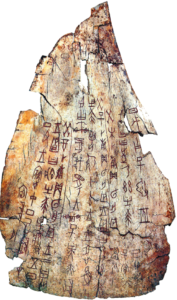
Yin Xu, the final capital of China’s Shang Dynasty (1600–1046 BCE), marks the dawn of recorded Chinese history. For centuries, the Shang Dynasty existed only in legend—until the 1899 discovery of oracle bone inscriptions at Yin Xu transformed myth into irrefutable fact. These inscribed turtle shells and ox scapulae, used for divination by Shang rulers, are the earliest known form of Chinese writing, documenting everything from celestial events to royal decrees.

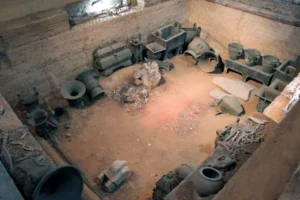
As the political and spiritual heart of China’s first archaeologically confirmed dynasty, Yin Xu flourished under King Wu Ding, whose 59-year reign saw unprecedented advancements in bronze metallurgy, warfare, and governance. The site’s royal tombs, including the undisturbed burial of Queen Fu Hao—military leader, priestess, and diplomat—reveal a society steeped in ritual, ancestor worship, and artistic mastery.

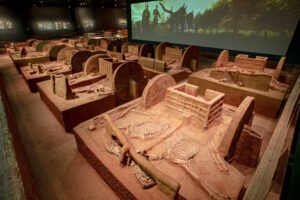
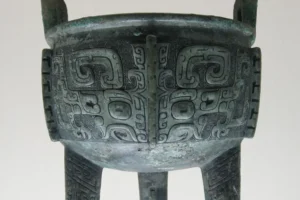
Yin Xu’s bronze ritual vessels, some weighing over 800 kg, and its chariot pits—the earliest evidence of horse-drawn chariots in East Asia—underscore the Shang’s technological prowess. Designated a UNESCO World Heritage Site in 2006, Yin Xu isn’t just an archaeological treasure; it’s the foundation of Chinese cultural identity, bridging the gap between prehistory and the written word.

Political Hub

For 255 years, Yin Xu served as the Shang Dynasty’s administrative heart, ruled by 12 kings, including Wu Ding, under whom the empire flourished.

Cultural Legacy

Oracle bones—used for divination—documented everything from harvests to wars, forming the earliest Chinese writing system.


Technological Mastery

Shang artisans cast intricate bronze vessels for rituals, showcasing metallurgical skills unmatched in the ancient world.

Archaeological Discoveries

Unearth the secrets of the Shang Dynasty through Yin Xu’s groundbreaking finds: oracle bone inscriptions, royal tombs, and chariot pits. These discoveries redefined Chinese history, offering tangible proof of rituals, governance, and technological brilliance..

Visitor Information

Opening Hours

Tuesday - Sunday: 9:00 AM - 5:00 PM
Closed on Mondays

Contact

Phone: +12345678910
Email: info@visitanyang.com

Location

Yindu District, Anyang City,
Henan Province, China

Admission

Adults: ¥100
Students and Seniors: ¥50
Children under 12: Free

GET IN TOUCH

Anyang , A must visit city
in your lifetime